


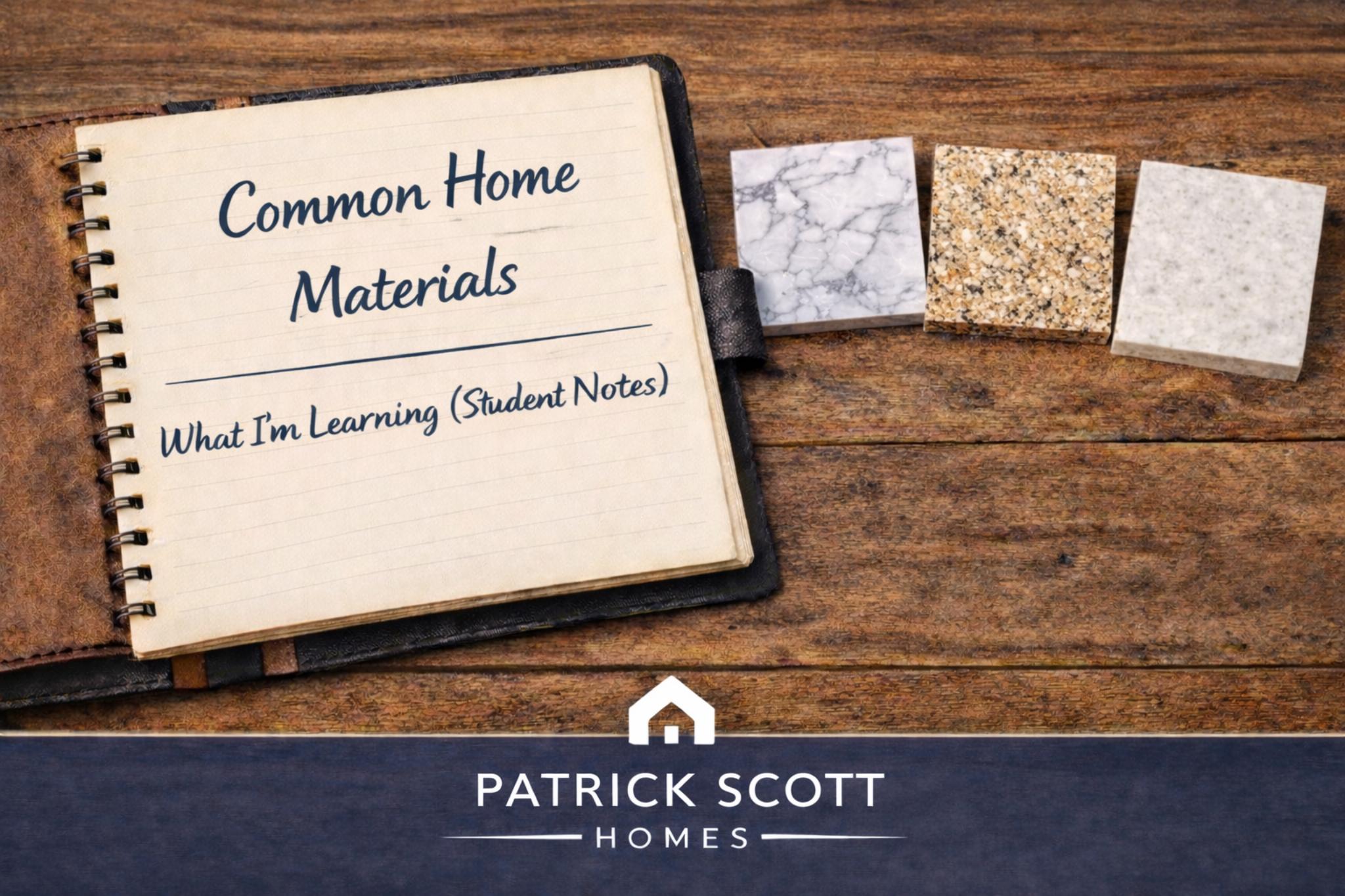
As I move deeper into real estate school, I’m realizing that understanding homes isn’t just about layouts, neighborhoods, or architectural styles.
It’s also about materials.
Before starting this process, I knew terms like marble, granite, and quartz mostly from design shows or listing photos. What I’m learning now is that these materials carry very specific characteristics, expectations, and trade-offs that matter in real estate conversations.
This post is part of my pre-license school journal and reflects what I’m learning as a student, not advice or instruction.
Why Materials Matter More Than I Expected
At first, materials felt like a design detail. Something aesthetic rather than practical.
As I’ve progressed through coursework and paid closer attention to listings, inspections, and disclosures, it’s become clear that materials influence maintenance, durability, cost, and long-term expectations. Knowing the difference between materials helps avoid vague descriptions and misunderstandings.
It’s another example of how real estate relies on precise language.
Marble: Beautiful, but Not Simple
Marble is often associated with luxury and high-end finishes, and it’s easy to see why. Its natural veining and softness give it a distinctive look.
What surprised me as a student is learning how delicate marble can be compared to other materials. It’s porous, can stain easily, and often requires more maintenance than people expect.
Understanding these characteristics helps explain why marble is admired but not always practical for every household.
Granite: Durable and Natural
Granite is another natural stone that comes up frequently in real estate discussions.
Compared to marble, granite is generally more durable and resistant to heat and scratches. It still requires sealing and care, but it’s often viewed as a more forgiving material in high-use areas.
Learning the differences between marble and granite has helped me understand why listings often highlight one over the other.
Quartz: Engineered for Consistency
Quartz was a material I assumed was natural stone until I started school.
What I’m learning now is that quartz countertops are engineered materials made from natural quartz combined with resins. This process creates a surface that’s non-porous, consistent in appearance, and generally lower maintenance.
That distinction between natural and engineered materials has come up repeatedly in my studies, and it’s changed how I interpret product descriptions.
Natural vs Engineered Materials
One of the broader lessons I’m learning is the importance of understanding whether a material is natural or engineered.
Natural materials often have unique variation and character but may require more care. Engineered materials tend to prioritize durability, consistency, and ease of maintenance.
Neither is inherently better. They simply serve different needs, lifestyles, and expectations.
Why This Knowledge Matters in Real Estate
From a student’s perspective, learning about materials feels less about memorization and more about communication.
Accurately describing finishes helps set realistic expectations and builds trust. It also reinforces the importance of being precise rather than relying on buzzwords or assumptions.
The more I learn, the more I see how material knowledge supports clearer conversations throughout the real estate process.
Why I’m Documenting This as Part of My Journey
I’m sharing these reflections because learning about home materials has been more impactful than I expected. It’s added another layer to how I evaluate homes and understand listings.
If you’re considering real estate school or are simply curious about how professionals learn to talk about homes accurately, I hope this provides useful insight. There’s more nuance here than I initially realized, and I’m continuing to build that understanding as I move forward.
I’ll keep documenting what I learn as I prepare for the licensing exam and beyond.