


📝 Intro Section
Buying a home is not a single event. It is a process that unfolds over time, with each stage building on the one before it.
This home buying timeline breaks down the typical steps first-time buyers experience, how long each stage often takes, and what you should focus on along the way. While timelines vary based on personal circumstances and market conditions, this guide provides a realistic framework to help you plan with confidence.
All information on this page is for educational purposes only.
🧭 Overview: How Long Does Buying a Home Take?
For most buyers, the home buying process takes anywhere from 3 to 6 months from early planning to closing. Some buyers move faster, while others take longer, especially if they are waiting for the right home or improving financial readiness.
The timeline below shows the most common phases buyers move through.
🟦 Phase 1: Early Planning & Financial Preparation
Estimated time: 2–8 weeks (or longer, if needed)
This is the foundation stage of home buying and one of the most important.
What happens during this phase
- Reviewing your budget and monthly expenses
- Saving for a down payment and closing costs
- Checking credit reports and understanding credit scores
- Learning the basics of how home buying works
Why this phase matters
Strong preparation reduces stress later and helps prevent rushed decisions once homes enter the picture.

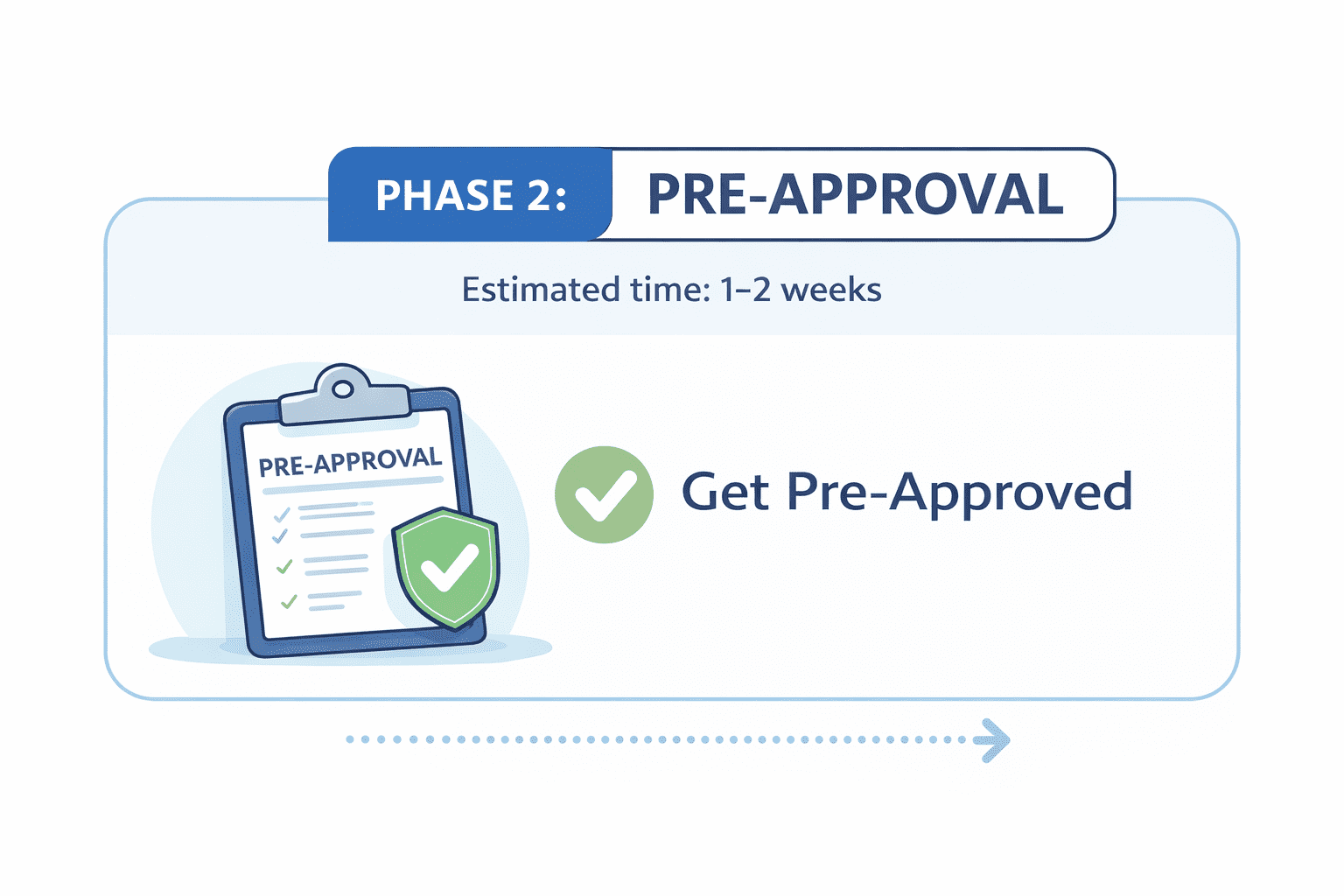
🟦 Phase 2: Mortgage Pre-Approval
Estimated time: 1–2 weeks
Pre-approval helps clarify how much you may be able to borrow and what monthly payments might look like.
What happens during this phase
- Submitting financial documents to a lender
- Reviewing loan options and interest rates
- Receiving a pre-approval letter
Why this phase matters
Pre-approval strengthens your position when you are ready to make an offer and helps narrow your home search realistically.
🟦 Phase 3: Home Search
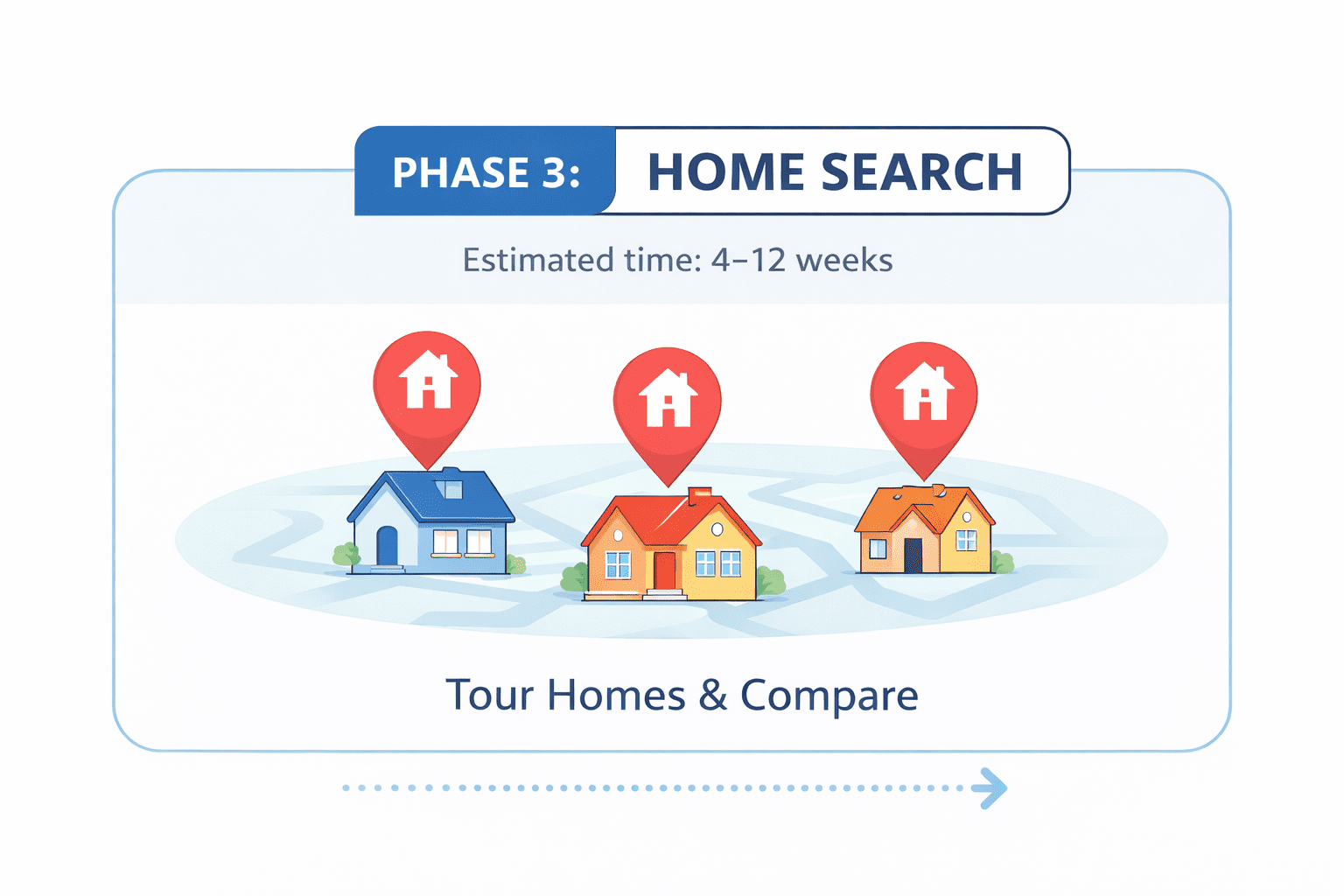
Estimated time: 4–12 weeks
This is the stage most people think of first, but it works best when it comes after preparation.
What happens during this phase
- Touring homes
- Comparing neighborhoods and layouts
- Refining priorities based on what you see
- Monitoring new listings
Why this phase varies
Market conditions, inventory, price range, and personal preferences all influence how long the search takes.
🟦 Phase 4: Making an Offer & Negotiation
Estimated time: 1–7 days
Once you find a home that feels right, the process moves more quickly.
What happens during this phase
- Submitting an offer
- Negotiating price or terms if needed
- Reaching an agreement with the seller
Why this phase can feel stressful
Decisions happen faster here, which is why education earlier in the process is so valuable.

🟦 Phase 5: Inspections & Due Diligence
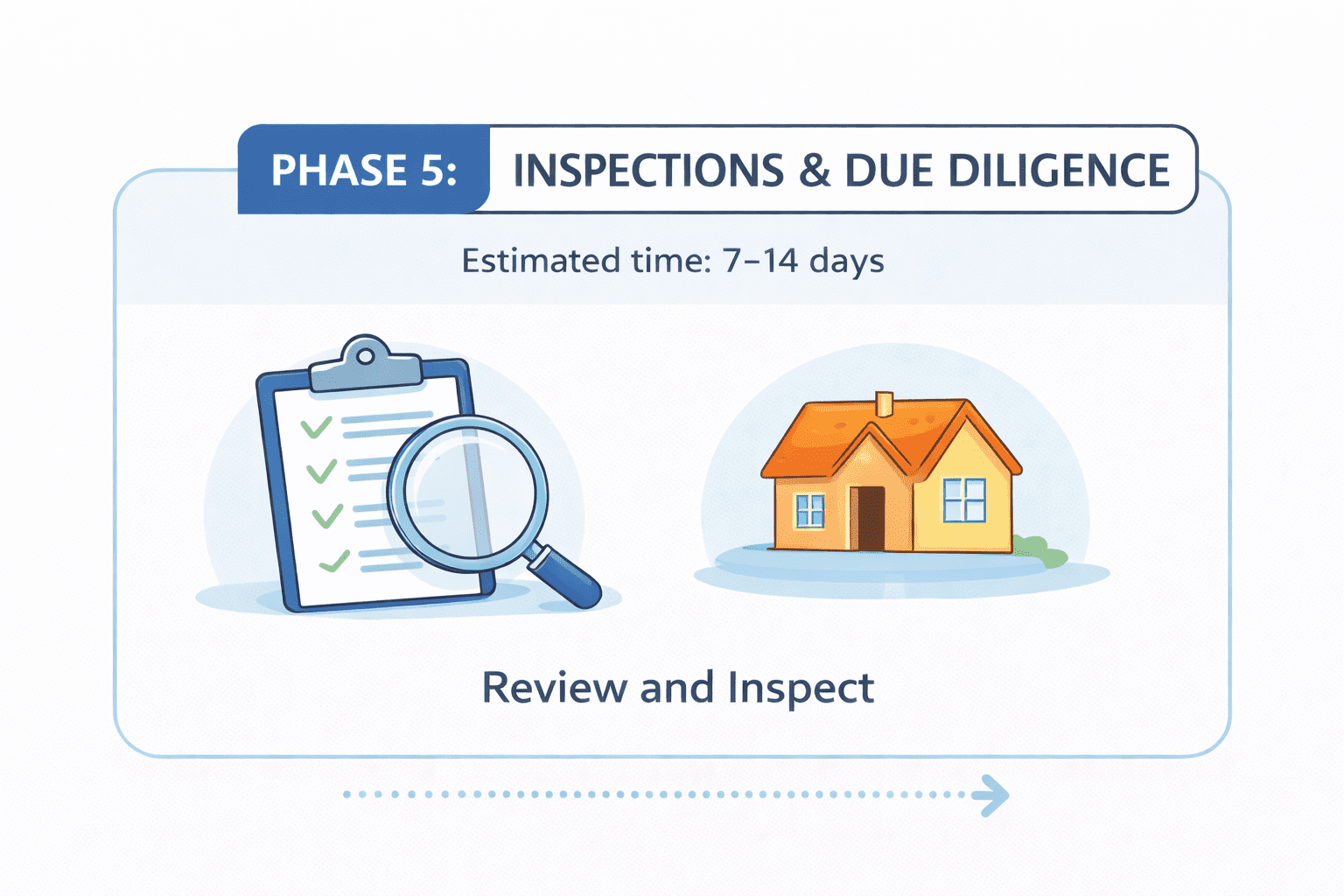
Estimated time: 7–14 days
This phase protects the buyer and provides critical information about the property.
What happens during this phase
- Home inspection
- Reviewing inspection findings
- Requesting repairs or credits if needed
Why this phase matters
Inspections help buyers make informed decisions and avoid unexpected issues after closing.
🟦 Phase 6: Closing Process
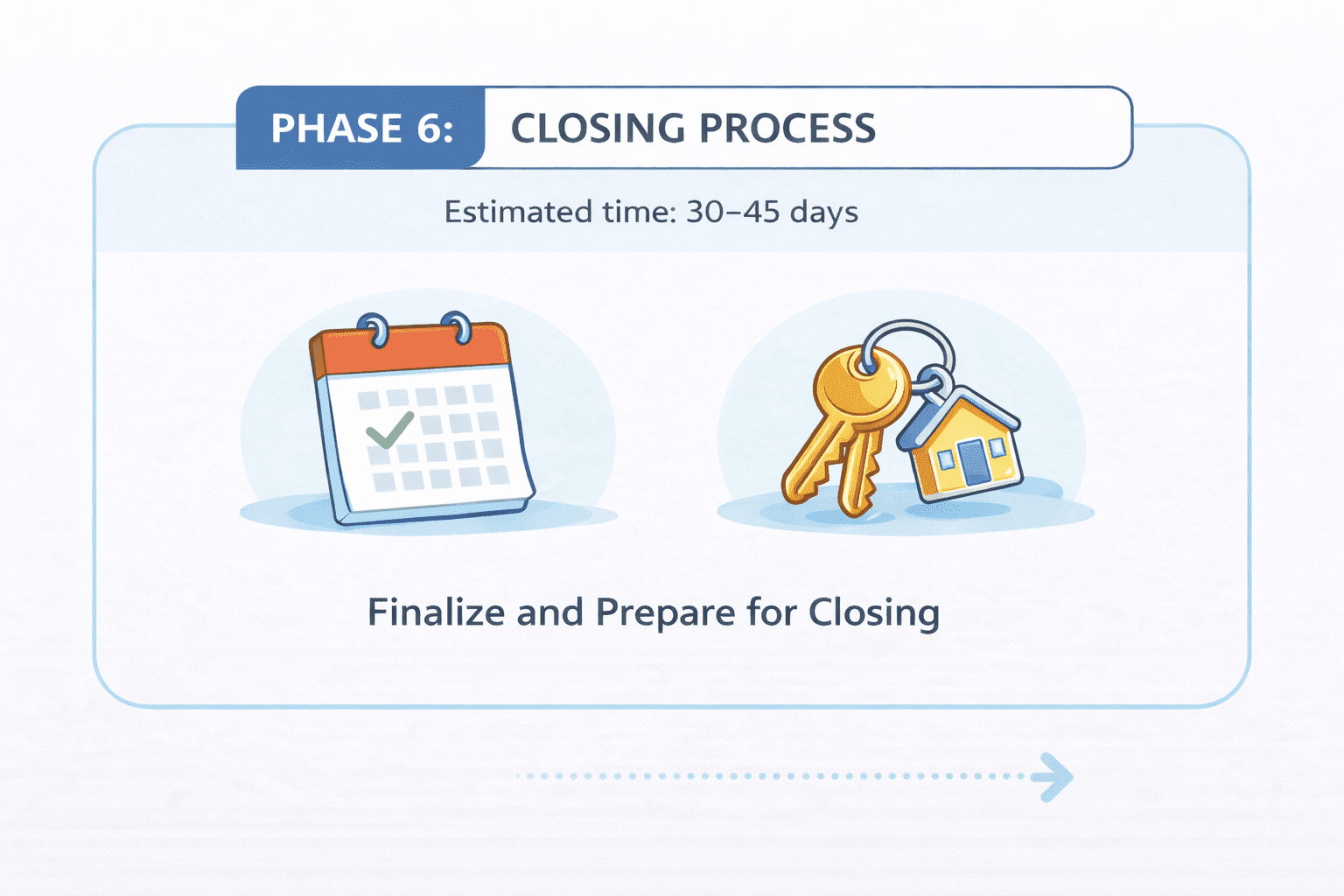
Estimated time: 30–45 days
This is the final stretch of the home buying timeline.
What happens during this phase
- Final loan approval
- Appraisal
- Title review
- Signing closing documents
What to expect
While this phase can feel paperwork-heavy, it is mostly administrative and moves steadily once underway.
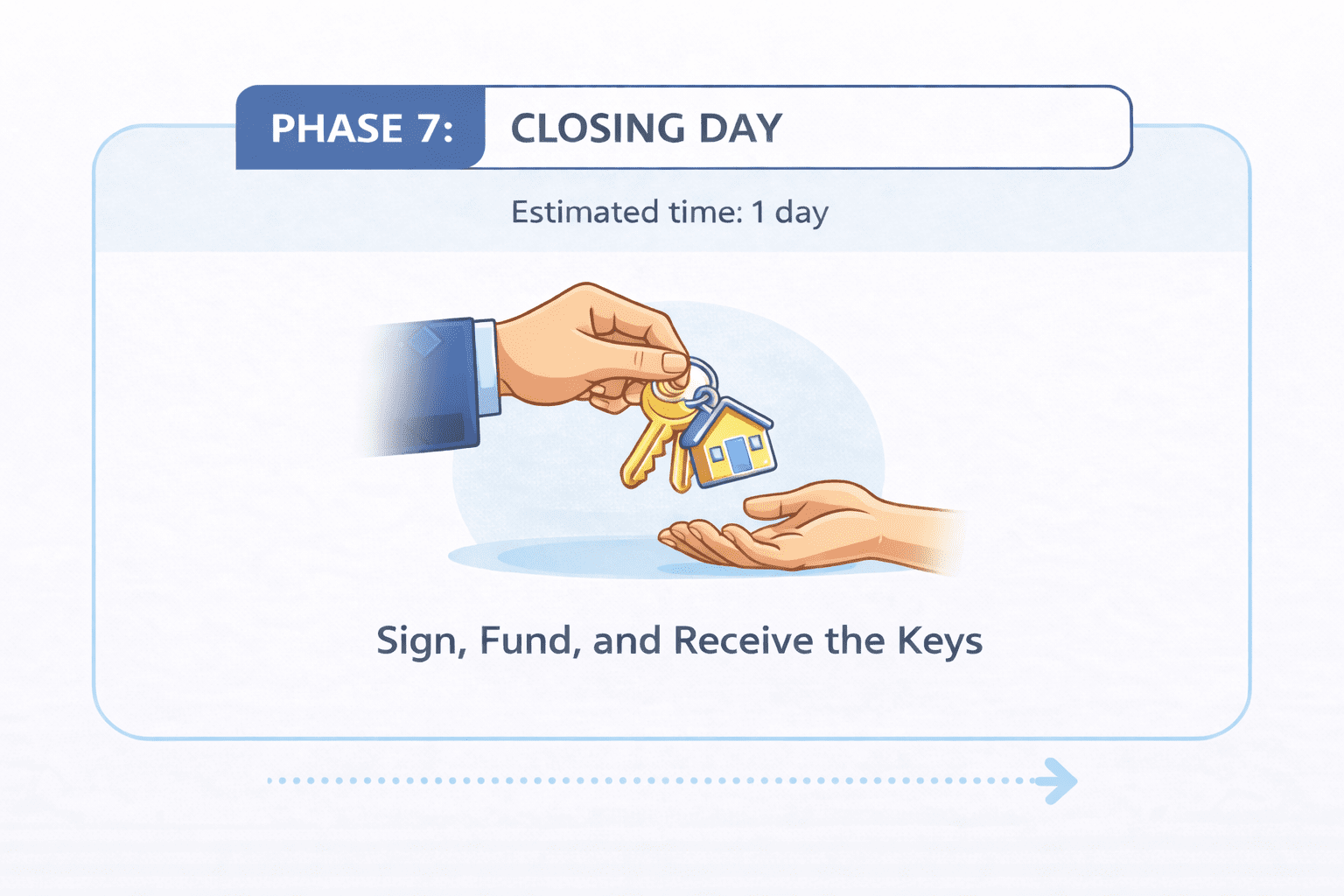
🟦 Phase 7: Closing Day
Estimated time: 1 day
Closing day is when ownership officially transfers.
What happens on closing day
- Final documents are signed
- Funds are transferred
- Keys are released
This marks the end of the buying process and the beginning of homeownership.
🧠 Common Timeline Misconceptions
- Faster is not always better
- Taking time to prepare can shorten later stages
- Delays are common and usually manageable
Understanding the timeline helps set realistic expectations and reduces anxiety.
Review the First-Time Home Buyer Checklist
Explore the Home Buying Guide
Use the Mortgage Calculator