


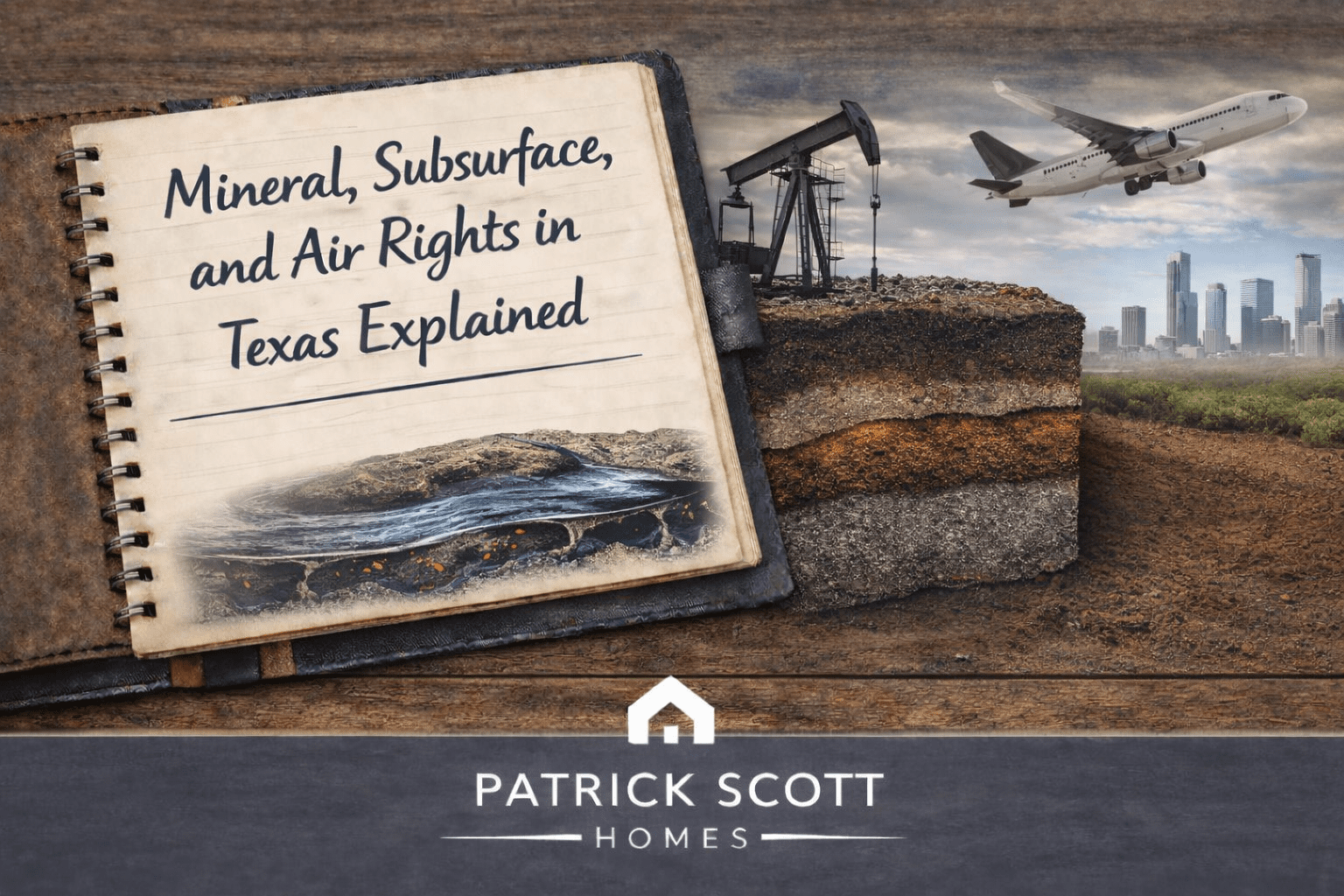
Mineral, Subsurface, and Air Rights in Texas: What I’m Learning in Real Estate School
One thing real estate school is doing really well is breaking the illusion that property ownership is just “the land and the house.”
In Texas, ownership is layered.
You don’t just buy the surface. You may or may not own what’s beneath the land. You may or may not control what happens above it. And sometimes, the most valuable part of a property isn’t visible at all.
This section of my coursework has focused on mineral rights, subsurface rights, and air rights, and it’s completely reshaped how I think about property.
Here’s what I’m learning so far.
What Mineral and Subsurface Rights Really Mean
Mineral rights are part of what’s known as subsurface rights. They deal with the ownership and use of natural resources located beneath the surface of the land.
This can include things like:
- oil
- natural gas
- coal
- metals
- and other extractable resources
In Texas, subsurface rights can be sold or leased separately from surface rights. That means someone can own the land, but not own what’s underneath it.
This is huge in Texas.
A person might buy a ranch, a residential lot, or even a suburban home and later find out that another party owns the mineral rights and has legal access to explore or drill, subject to regulations and surface-use agreements.
From a real estate perspective, this affects:
- property disclosures
- title research
- land use expectations
- negotiation strategy
- and long-term risk and value
How Mineral Leases Usually Work
One of the case studies in this section described landowners negotiating a lease with an oil company.
Instead of selling the minerals outright, many owners lease their mineral rights. The oil or gas company gets the right to explore and produce, and the landowner receives compensation.
That compensation often includes:
- a signing bonus
- surface-use agreements
- and most importantly, a percentage of production revenue
That percentage is called a royalty interest.
This is why mineral rights can be extremely valuable even when the surface land itself looks ordinary.
Why Surface Owners Still Care, Even If They Don’t Own the Minerals
Even when mineral rights are separated, surface owners are not powerless.
Modern leases often involve negotiations about:
- drilling locations
- road placement
- environmental protections
- water use
- noise and access issues
From what I’m seeing in the coursework, a smart surface agreement can make a major difference in protecting property use, lifestyle, and long-term land value.
For buyers, it also reinforces why title review and proper representation matter. You are not just buying a house. You are buying a bundle of legal rights.
Air Rights: Owning the Space Above the Land
Another concept that surprised me was air rights.
Air rights refer to the ownership and use of the space above a piece of land. In dense urban environments, these rights can be incredibly valuable.
Air rights may be sold or transferred, allowing:
- taller buildings
- overhangs
- skybridges
- or expanded development above existing structures
Air rights are often used in downtown areas where land is limited but vertical development is possible.
From a real estate standpoint, air rights can affect:
- zoning strategy
- building design
- redevelopment potential
- and long-term investment value
Easements for Light and Air
In one of the case studies, a property owner negotiated easements for light and air to protect a building from being blocked by new construction.
These easements legally preserve access to:
- natural light
- airflow
- and sometimes views
This becomes especially important in growing urban cores where new towers can drastically change how existing properties function.
It’s a reminder that not all property rights involve physical land. Some protect conditions that make property usable.
Transferable Development Rights (TDRs)
Another fascinating concept I’m learning about is Transferable Development Rights, often called TDRs.
TDRs allow a property owner to transfer unused development rights from one property to another.
For example, if zoning allows a building up to 10 stories but only 4 are built, the unused development capacity can sometimes be sold and used on another site.
TDRs are commonly used to:
- preserve historic buildings
- protect low-density neighborhoods
- shift density into growth corridors
- and compensate owners without forcing demolition
From a planning and investment perspective, this adds a whole other layer to how value can be created in real estate.
Why These Rights Matter in Real Transactions
Mineral, subsurface, and air rights are not abstract legal ideas. They show up in real ways:
- title policies
- property disclosures
- commercial development
- land purchases
- rural and ranch transactions
- and urban redevelopment projects
They can affect whether a buyer truly controls the property the way they assume they do.
And in Texas especially, mineral rights can be worth more than the surface estate itself.
Final Thoughts from the Classroom
This part of real estate school has made one thing very clear.
When you buy property in Texas, you are not just buying dirt and a structure. You are buying a bundle of rights that may include surface use, subsurface ownership, airspace, development potential, and income streams most people never think about.
Understanding how those rights work is a huge part of protecting buyers, advising sellers, and building long-term value.
And honestly, it’s one of the reasons I’m enjoying this process more than I expected.