


When most people think about qualifying for a real estate loan, they think about credit scores, down payments, and income.
But when it comes to rental properties, lenders are usually more interested in something else:
👉 The property’s ability to pay for itself.
That’s where rental cash flow analysis comes in.
Whether you’re studying for the Texas real estate exam, planning to invest, or just trying to understand how income properties really work, this is one of the most important concepts you can learn.
Because rental real estate is evaluated less like a home…
…and more like a small business.
What “Cash Flow” Means to a Lender
To a lender, cash flow answers one main question:
Does this property generate enough income to safely cover its debt and expenses?
They are not just looking at:
- What you hope to rent it for
- Or what Zillow says it might make
They’re looking at documented, supportable numbers, including:
- Current rental income
- Historical performance
- Operating expenses
- Vacancy risk
- And how much cushion exists if something goes wrong
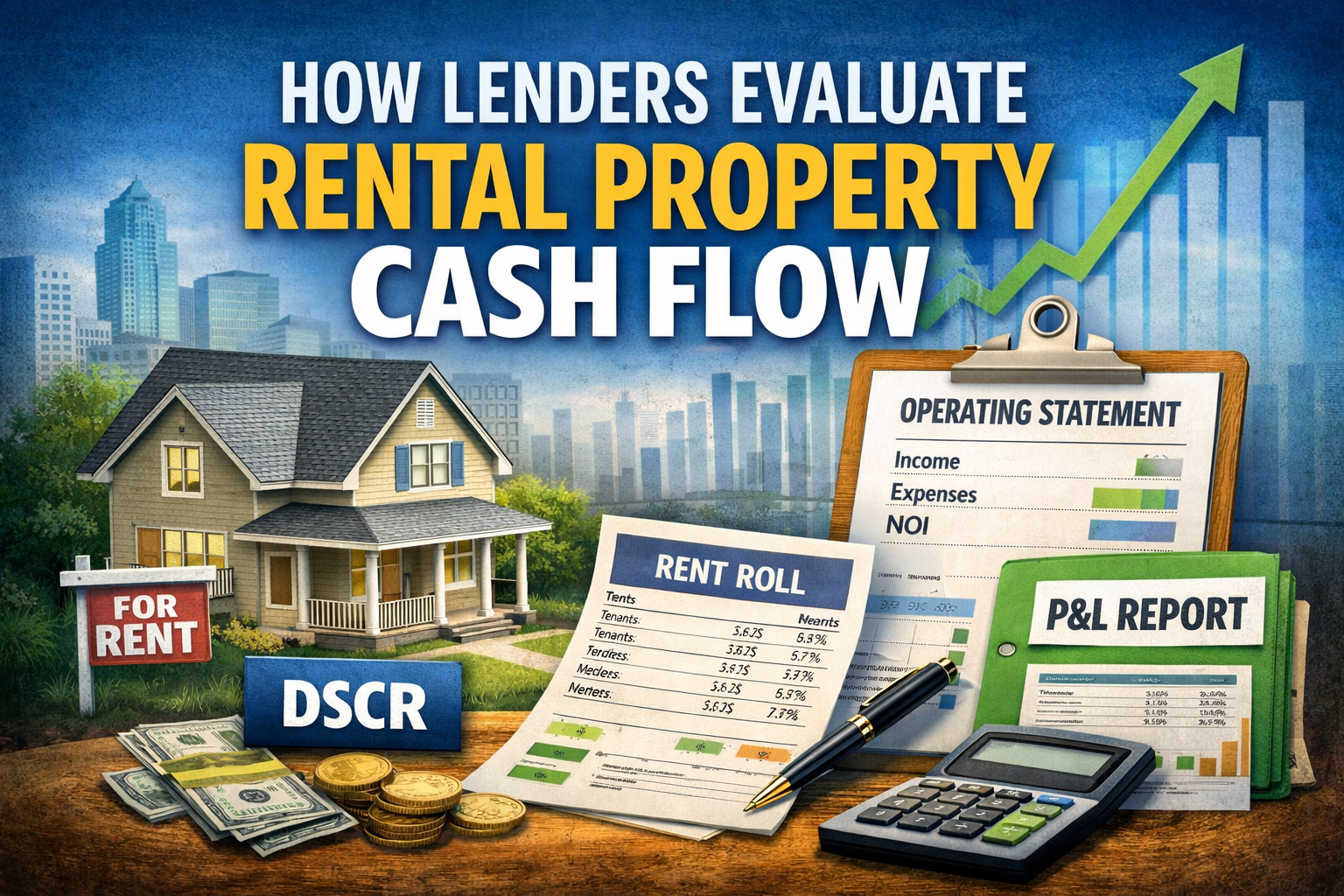
This analysis usually centers around four major components:
- Rent rolls
- Operating statements (P&Ls)
- Expense ratios
- DSCR (Debt Service Coverage Ratio)
Let’s break those down in plain English.
Rent Rolls: The Property’s Income Snapshot
A rent roll is essentially a report card for a rental property’s income.
It shows:
- Each unit
- Who occupies it
- How much rent is being charged
- Lease start and end dates
- And sometimes payment history
Lenders use rent rolls to verify:
- Total monthly and annual income
- How stable the tenants are
- Whether rents appear sustainable
- How much vacancy risk exists
A property that is fully leased with long-term tenants looks very different to a lender than one with empty units and month-to-month leases.
If you plan to invest long-term, understanding rent rolls is just as important as understanding purchase contracts or deeds. You’ll see this topic come up again in future posts like “How REITs Make Money: Rents, Sales, and Dividends” and “What Is Real Estate Syndication? A Beginner’s Guide.”
Operating Statements (P&Ls): Where Lenders Get Serious
This is where most new investors get tripped up.
An operating statement (also called a profit and loss statement or P&L) shows:
- Gross rental income
- Other income (laundry, parking, pet fees, etc.)
- Operating expenses
- Net operating income (NOI)
Typical operating expenses include:
- Property management
- Repairs and maintenance
- Property taxes
- Insurance
- Utilities paid by the owner
- Landscaping, pest control, admin costs, and more
What lenders are looking for is Net Operating Income (NOI), which is:
Gross Income – Operating Expenses = NOI
NOI is the foundation for nearly every income-property calculation, including loan approval, property valuation, and DSCR.
This is also where topics like depreciation and deductibility start to matter, which we’ll cover more deeply in upcoming posts like:
- “Residential Rental Property Depreciation Explained (Why 27.5 Years Matters)”
- “What Expenses Can You Deduct Immediately vs Depreciate Over Time?”
Expense Ratios: The Reality Check
Lenders don’t just accept whatever expenses a seller claims.
They compare operating costs to industry norms using an expense ratio, which looks like:
Operating Expenses ÷ Gross Income = Expense Ratio
If a property claims unusually low expenses, lenders may:
- Adjust them upward
- Apply market averages
- Or stress-test the numbers
Why?
Because underestimated expenses are one of the fastest ways for an investment to fail.
Roof replacements, vacancies, plumbing issues, insurance increases, and tax reassessments all happen. Lenders want to see whether a property can survive real-world ownership, not just best-case scenarios.
DSCR: The Number That Often Decides Everything
DSCR stands for Debt Service Coverage Ratio.
It measures whether the property’s income can cover its loan payments.
The formula looks like this:
NOI ÷ Annual Debt Payments = DSCR
Example:
If a property produces $80,000 in NOI and the mortgage costs $65,000 per year:
80,000 ÷ 65,000 = 1.23 DSCR
Most lenders want to see a DSCR above 1.0, and many require 1.15–1.30+ depending on the loan type.
What this means in real life:
- A DSCR of 1.0 means the property barely breaks even
- Anything below 1.0 means the property loses money
- Higher DSCRs signal lower risk
This is why rental properties are evaluated differently than primary residences. Approval is tied to property performance, not just borrower income.
This concept ties directly into bigger investing conversations like “Why Real Estate Is Considered a Long-Term Investment” and “The Difference Between Passive and Active Real Estate Investing.”
Why Operating Statements Matter So Much
If you take nothing else from this post, take this:
👉 Operating statements are how lenders see the truth of a rental property.
They cut through:
- Sales hype
- Bad assumptions
- And emotional buying decisions
They show whether a property is:
- Sustainable
- Scalable
- Financeable
- And resilient
Whether you plan to buy a duplex, join a syndication, invest through a REIT, or eventually structure ownership through an LLC or trust, these fundamentals show up everywhere.
And they absolutely show up on the Texas real estate exam.
Final Thought
Real estate investing is not just about finding a house.
It’s about understanding:
- How income is measured
- How risk is evaluated
- And how lenders think
The moment you understand rent rolls, operating statements, expense ratios, and DSCR, you stop looking at properties like a shopper…
…and start analyzing them like an owner.