


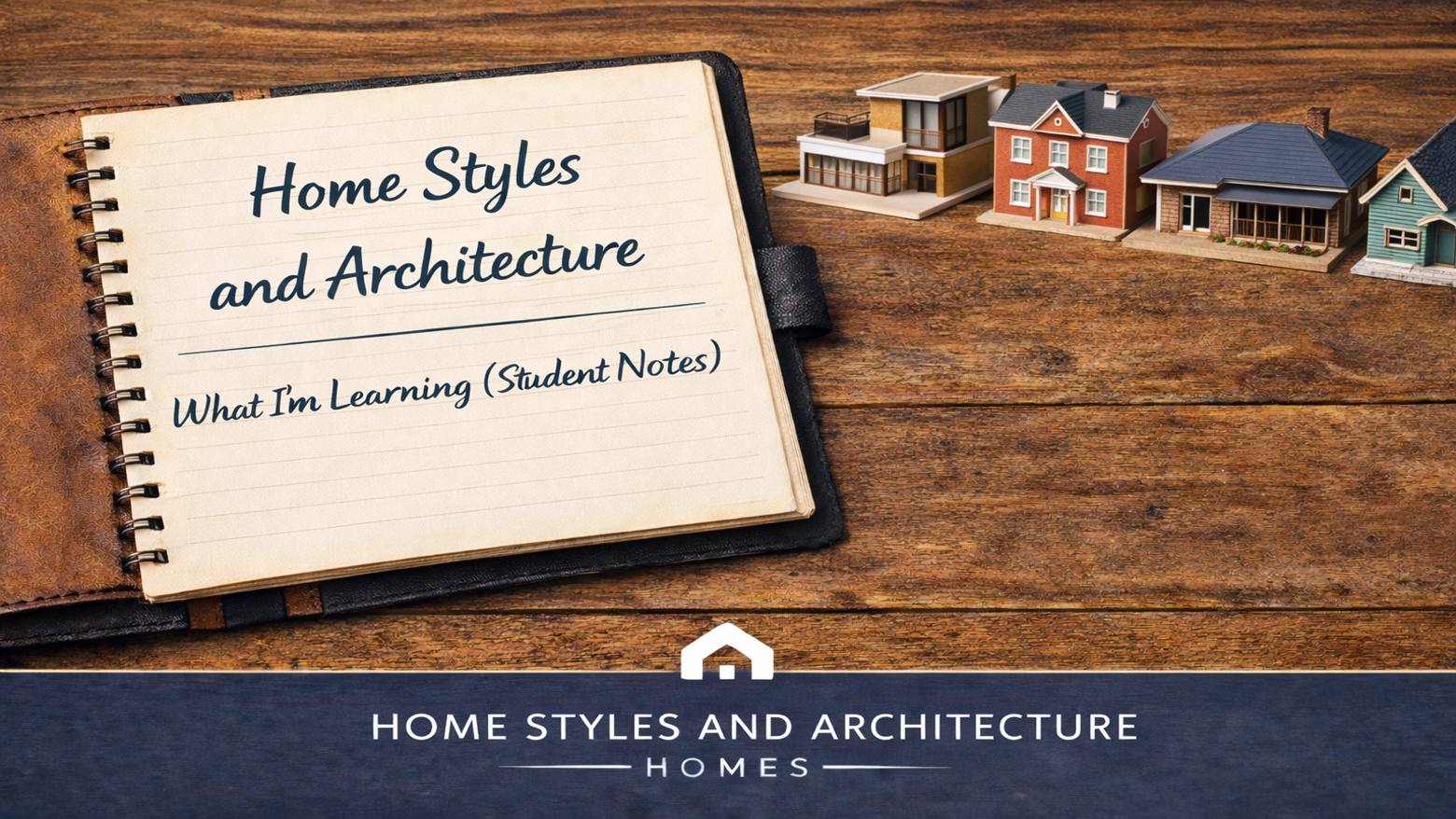
One thing I didn’t fully appreciate before starting real estate school was just how much language matters in real estate.
Specifically, the language of home styles and architecture.
Before classes, I used terms like “modern,” “traditional,” or “ranch” pretty loosely. What I’m learning now is that these words actually mean very specific things, and understanding them helps set accurate expectations for buyers, sellers, and professionals alike.
This post is part of my pre-license school journal and reflects what I’m learning as a student, not advice or instruction.
Why Home Styles Matter More Than I Expected
At first glance, architectural style might seem like a preference issue. You like what you like.
But as I’ve moved through my coursework and started paying closer attention to listings, neighborhoods, and housing history, I’ve realized that style influences much more than aesthetics. It shapes layout, functionality, maintenance expectations, and even how homes are marketed and described.
Knowing the correct terminology helps avoid confusion and miscommunication, which is something Texas real estate education emphasizes heavily.
Modern vs Contemporary (These Get Confused Constantly)
One of the biggest lightbulb moments for me was learning the difference between modern and contemporary homes.
Before school, I thought they were interchangeable. They’re not.
Modern architecture typically refers to a specific design movement that emerged in the early to mid-20th century. These homes often feature clean lines, minimal ornamentation, and an emphasis on function.
Contemporary homes, on the other hand, reflect what’s current or popular right now. That means contemporary design can evolve over time and often borrows elements from multiple styles.
Understanding this distinction has already changed how I read listings and describe homes, even as a student.
Traditional and Craftsman Homes
Traditional homes are another category I used to think of as vague. In reality, “traditional” often acts as an umbrella term for designs rooted in classic architectural elements rather than a single style.
Craftsman homes, however, are much more defined. As I’m learning, these homes are known for details like low-pitched roofs, exposed beams, and an emphasis on handcrafted features.
What stands out to me is how much intention goes into these designs. Once you know what to look for, they become much easier to recognize.
Ranch and Mid-Century Modern Homes
Ranch-style homes are another category that comes up frequently, especially in certain Texas neighborhoods.
These homes are typically single-story, emphasize open layouts, and prioritize ease of movement. From a learning perspective, it’s been interesting to see how ranch homes reflect the era in which they were popular.
Mid-century modern homes fall into a similar historical category but with a very distinct design philosophy. Clean lines, large windows, and integration with outdoor spaces are common features.
Studying these styles has made me more aware of how architecture often mirrors lifestyle trends of the time.
Why Learning These Distinctions Matters
One of the biggest takeaways from this part of my education is that architectural terms aren’t just descriptive. They’re communicative.
Using the right terminology helps align expectations, reduces misunderstandings, and builds confidence in the transaction process. From a student’s perspective, this feels less like memorization and more like learning a shared language.
Why I’m Documenting This as Part of My Journey
I’m sharing what I’m learning because understanding home styles has been more impactful than I expected. It’s changed how I look at neighborhoods, listings, and even my own assumptions about housing.
If you’re considering real estate school or simply curious about how professionals learn to categorize and describe homes, I hope this gives useful insight. There’s more nuance here than I realized before starting the program.
I’ll continue documenting what I learn as I move forward in my education and prepare for the licensing exam.