


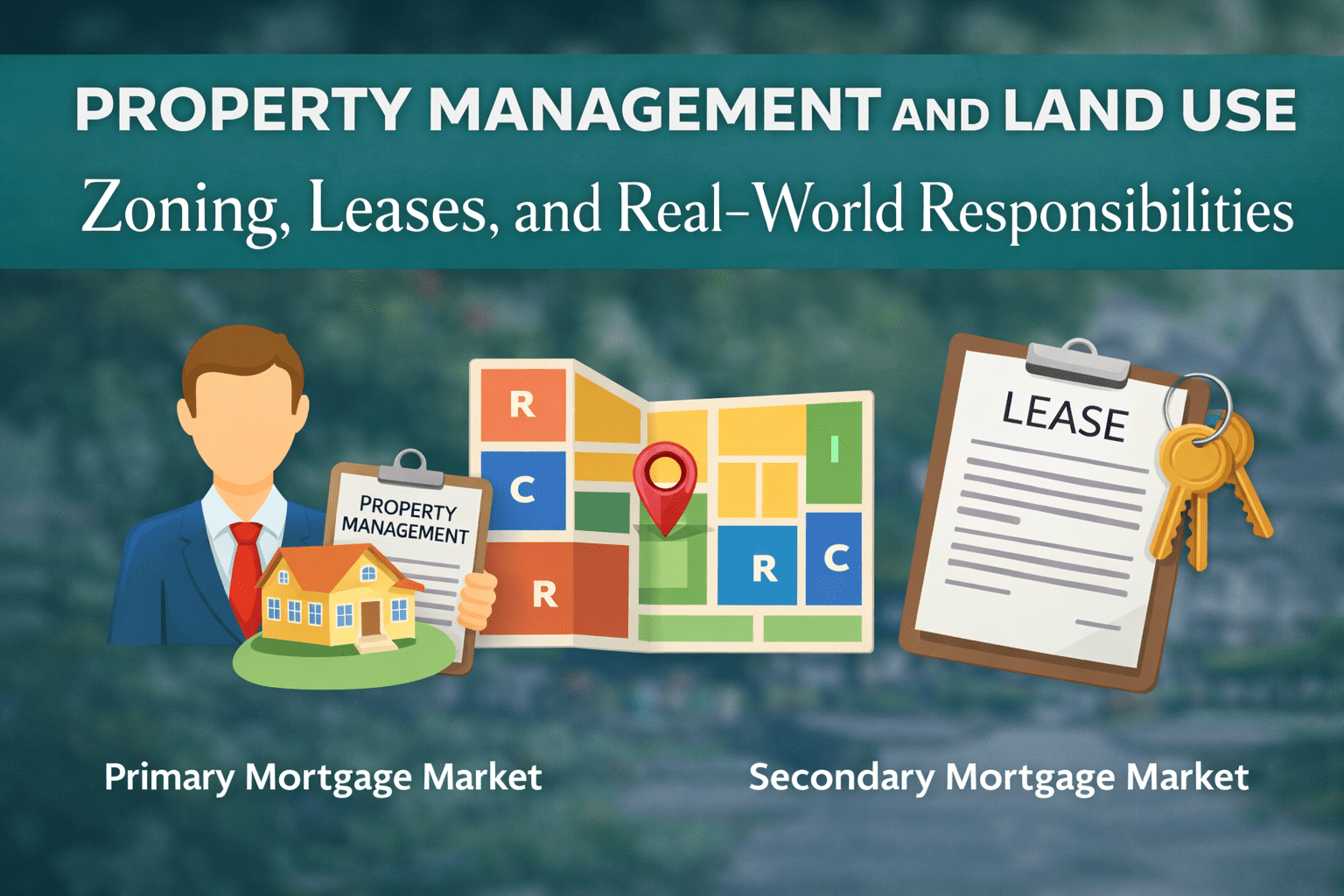
Property management and land use controls shape almost everything we see in real estate. They determine how properties can be used, how communities grow, how income properties operate, and how owners and tenants interact.
Yet for many buyers, sellers, and investors, these systems remain confusing or invisible until a problem arises.
This guide breaks down how property management actually works, what zoning and land-use rules mean in practice, how leases define legal relationships, and what real responsibilities property managers carry.
If you are new to the process of evaluating properties, the Start Here guide may help set the foundation:
https://patrickscotthomes.com/start-here
What Property Management Really Involves
Property management is often misunderstood as simply collecting rent and answering maintenance calls.
In reality, professional property management includes:
• financial planning and budgeting
• marketing and tenant placement
• lease enforcement
• maintenance coordination
• legal compliance
• risk management
• owner representation
Property managers act as the operational arm of the owner while also serving as the daily point of contact for tenants.
The Dual Responsibility of a Property Manager
One of the most important concepts in property management is dual responsibility.
Property managers must balance:
• the owner’s need for profitability and asset protection
• the tenant’s need for habitability, service, and value
A successful property manager protects the owner’s investment while maintaining a property environment that attracts and retains tenants.
This balance directly impacts:
• vacancy rates
• maintenance costs
• long-term property condition
• legal risk
• market reputation
Ignoring either side creates instability.
Understanding Operating Budgets
Every income-producing property should operate on a formal budget.
An operating budget includes both:
• fixed expenses (property taxes, insurance, management fees)
• variable expenses (utilities, repairs, turnover costs, marketing)
Operating budgets help owners and managers:
• forecast cash flow
• plan reserves
• control expenses
• identify financial risks
• evaluate performance
Without a working operating budget, even profitable properties can quickly become financial liabilities.
Capital Reserves and Long-Term Planning
Beyond operating budgets, responsible managers plan for capital reserves.
Capital reserves fund:
• roof replacement
• HVAC systems
• parking surfaces
• plumbing infrastructure
• major renovations
These long-term costs are inevitable. Proper planning protects both property value and owner finances.
Zoning and Land Use: Why It Matters
Zoning is a form of public land-use control that determines how property may be used.
Local zoning ordinances regulate:
• residential density
• commercial activity
• industrial operations
• building height
• setbacks
• lot coverage
• parking requirements
Zoning exists to protect public health, safety, and general welfare.
For investors and developers, zoning is one of the most important value drivers. It determines what a property can legally become.
As-of-Right Uses
An as-of-right use is a property use automatically permitted under existing zoning.
If a use is as-of-right:
• no special approval is required
• no hearings are needed
• development may proceed if building codes are met
These uses carry the lowest regulatory risk and the highest predictability.
Zoning Variances
A zoning variance allows a property to deviate from zoning requirements when strict enforcement would cause undue hardship.
Variances may relate to:
• setbacks
• lot coverage
• height restrictions
• parking requirements
They are not granted for personal convenience or economic desire alone. They must be based on legitimate hardship tied to the land.
Understanding variance standards helps owners evaluate whether development plans are realistic before purchasing property.
Site Factors vs Neighborhood Factors
When analyzing land use and property potential, professionals separate:
Site factors
• land contour
• drainage
• access
• utilities
• topography
• orientation
Neighborhood factors
• population trends
• employment stability
• vacancy rates
• surrounding uses
• infrastructure
• zoning patterns
Property management decisions and zoning feasibility rely on both layers.
Lease Agreements and Legal Structure
Leases form the legal backbone of property management.
They define:
• possession rights
• financial obligations
• maintenance responsibilities
• legal remedies
• risk allocation
One important lease section is the demising clause.
The demising clause establishes:
• when possession transfers
• what space is being leased
• the landlord-tenant relationship
• the legal beginning of occupancy
Clear demising clauses reduce disputes and protect both parties.
Types of Commercial Lease Structures
Understanding lease types is critical for owners and tenants.
Common structures include:
Gross leases
The tenant pays rent. The owner pays most operating expenses.
Net leases
The tenant pays rent plus some or all operating expenses.
Percentage leases
The tenant pays base rent plus a percentage of gross sales.
Each structure shifts risk differently between owner and tenant.
How Property Management Impacts Value
Property management quality directly affects property value.
Strong management:
• reduces vacancy
• controls expenses
• preserves condition
• improves tenant retention
• lowers legal exposure
Weak management:
• accelerates deterioration
• increases turnover
• damages reputation
• erodes cash flow
• increases risk
Buyers often evaluate management systems as carefully as physical structures.
Why Buyers and Investors Should Care
Even owner-occupied buyers benefit from understanding management and zoning fundamentals.
It helps you:
• evaluate long-term usability
• anticipate neighborhood change
• avoid illegal uses
• assess future resale appeal
• understand HOA and rental limitations
For investors, management and zoning literacy is non-negotiable.
Final Thoughts
Property management and land use are the unseen systems that determine whether real estate thrives or fails.
They shape cash flow, legal exposure, community development, and long-term value.
Understanding these systems allows buyers, sellers, and investors to move beyond surface-level decisions and evaluate property from a strategic, sustainable perspective.
If you are planning a purchase or sale, the buyer and seller education hubs can help you apply these concepts practically:
https://patrickscotthomes.com/buyers
https://patrickscotthomes.com/sellers
Related Reading
Start Here: A Guide for Buyers and Sellers
https://patrickscotthomes.com/start-here
Understanding Real Estate Appraisal Principles
https://patrickscotthomes.com/blog/real-estate-appraisal-principles
Understanding Real Estate Financing
https://patrickscotthomes.com/blog/real-estate-financing-primary-secondary-mortgage-markets
Neighborhood Guides and Local Market Research
https://patrickscotthomes.com/neighborhood-guides